Free Printable Home Filing System: What Goes in Each Folder
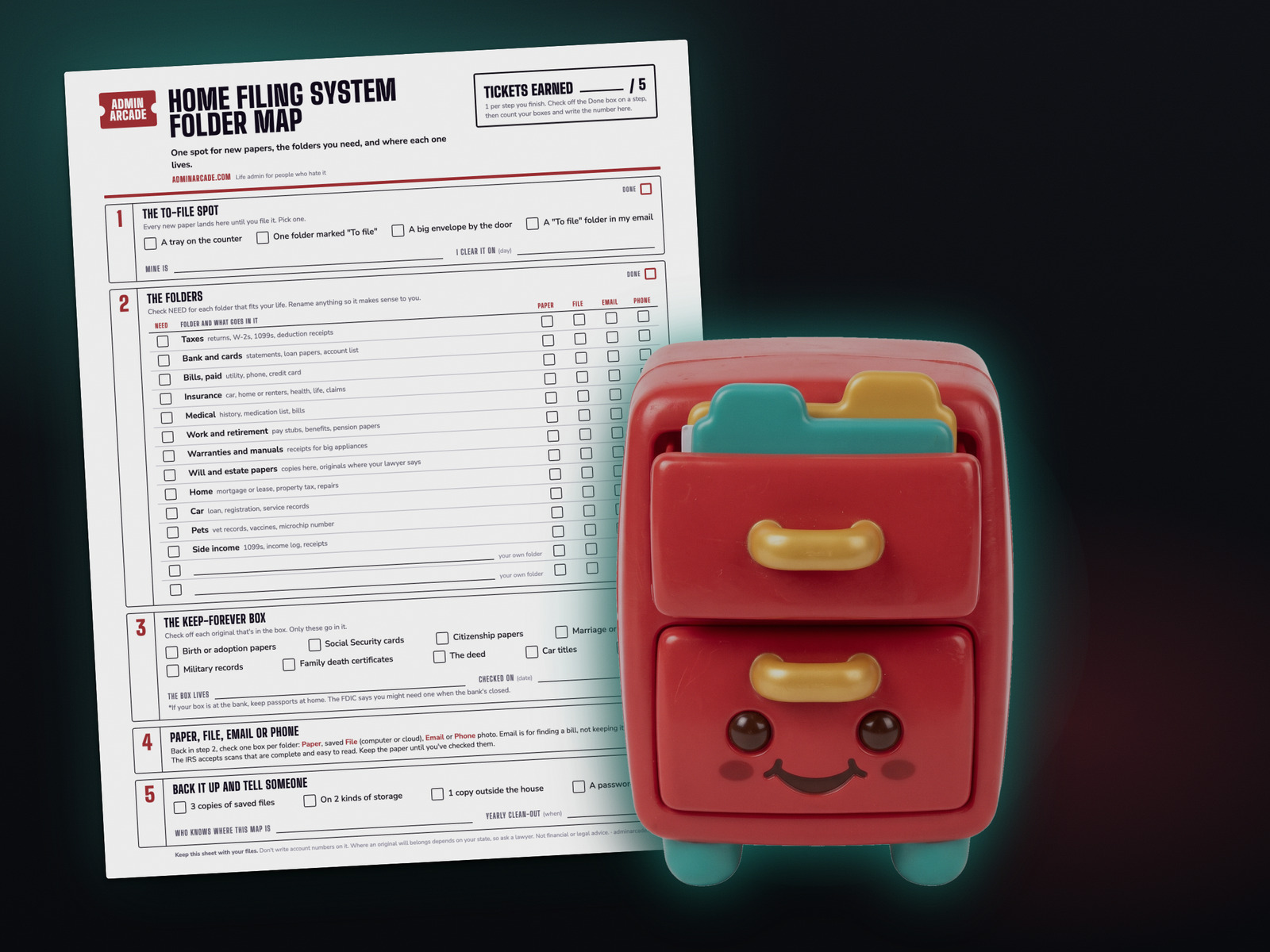
A home filing system is one spot where new papers land, a short set of folders for taxes, bank, bills, insurance, medical, work, home and car, a protected box for the papers you can’t replace, and a note on where each thing lives: paper, a saved file, email or your phone. The free printable home filing system and the Where It Lives tool below build your folder map in five steps.
My papers are in a file, or in my email
Right now my papers are mostly in a file or in my email. I don’t file well every time, so sometimes a paper ends up in the wrong folder, or in the safe, or something.
I don’t have any big new advice on this. So this post leans on the people who write the official guides: the FTC, the IRS, the FDIC, FEMA, and university extension offices that teach household money basics. It’s where they agree, plus the one spot where they don’t.
What goes in a home filing system?
Five steps, one ticket each. Stop after any of them and your papers are still in better shape than before.
- The to-file spot: one place where new papers wait.
- The folders: the ones that fit your life, nothing extra.
- The keep-forever box: originals you can’t easily replace.
- Paper, file, email or phone: where each folder actually lives.
- Back it up and tell someone: so a dead laptop doesn’t take your files, and someone else can find things too.
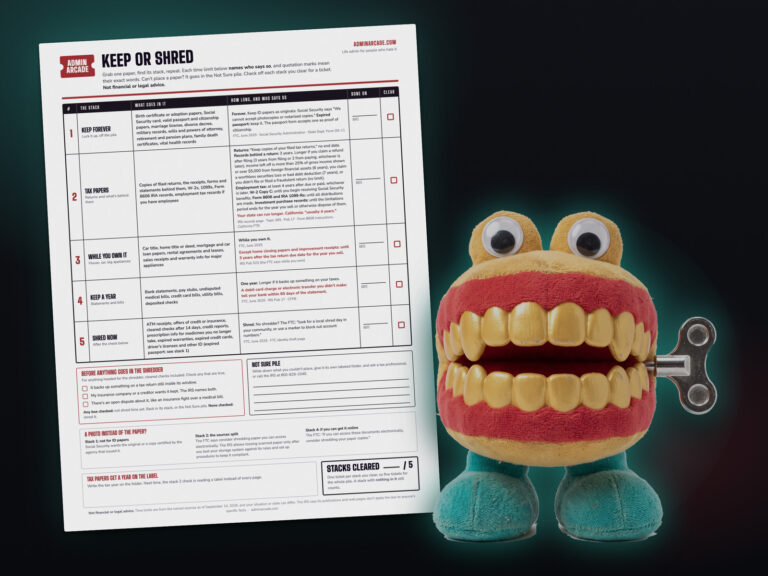
This post is about where things go. How long to hold on to each paper is its own question, and the keep-or-shred sheet answers it.
Step 1: Where should new papers go before they’re filed?
Pick one spot and send every new paper there: a tray on the counter, one folder marked “To file,” or a big envelope by the door. Make a “To file” folder in your email too, for the bills and statements that never show up on paper.
You don’t need a fancy setup. NDSU Extension’s family records guide says a metal filing cabinet, a box under the bed, a cardboard box or an accordion folder all do the job as well as a desk drawer.
Then empty it on a schedule. The University of Colorado’s home filing tips say a few minutes, once or twice a week, keeps it from turning into a pile.
Step 2: What folders do I need for household papers?
Fewer than you’d think. The guides each use slightly different labels, and several of them say to rename folders until they make sense to you. These are the folders they keep coming back to.
| Folder | What goes in it | Where it can live |
|---|---|---|
| Taxes | Returns, W-2s and 1099s, receipts for deductions | Paper or a saved scan |
| Bank and cards | Statements, loan papers, a list of your accounts | Saved file |
| Bills, paid | Utility, phone and credit card bills | Saved file |
| Insurance | Car, home or renters, health and life policies, claims | Paper or saved file |
| Medical | Medical history, medication list, medical bills | Paper or saved file |
| Work and retirement | Pay stubs, benefits, retirement and pension papers | Saved file |
| Warranties and manuals | Receipts and warranties for big appliances | Paper or saved file |
| Will and estate papers | Copies of your will, living will and powers of attorney | Paper |
| Home | Mortgage or lease, property tax, repair receipts | Paper or saved file |
| Car | Loan papers, registration, service records | Paper or saved file |
Add a Pets folder if you have one, and a Side income folder if you get 1099s from something other than a job. The side hustle income log lives happily in that one. For comparison, New Mexico State’s sample filing system has 13 main headings, so a list of 10 to 12 is normal.
Step 3: Which papers go in a fireproof box or safe deposit box?
The FTC’s keep-or-shred list names the papers to keep forever and lock up: birth or adoption papers, Social Security cards, passports, citizenship papers, marriage and divorce papers, military records, wills and powers of attorney, retirement and pension papers, and family death certificates. NDSU’s guide adds deeds and car titles to the protected pile.
Only those go in the box. When I don’t file well, papers end up in my safe that belong in a folder.
Where the box lives is your call. FEMA’s document checklist gives three options: a fireproof and waterproof box or safe at home, a safe deposit box at the bank, or a trusted friend or relative. A few things to know about each:
- Bank box: the FDIC says to keep passports and original powers of attorney out of it, since you might need them when the bank’s closed. What’s inside isn’t insured by the FDIC or the bank.
- Who can open it: FEMA suggests asking your bank, or checking your state’s law, about who can get into the box if you die or become too sick or hurt to handle things yourself.
- Home safe: New Mexico State’s guide warns that few home safes are truly fireproof or theft-proof. The FDIC suggests zip-top plastic bags inside for water.
The original will is where the sources split. The FDIC says to ask a lawyer what your state requires before putting it in a bank box, and the other guides each suggest something different. Keep a copy in your folder and put the original wherever your lawyer says.
Step 4: Should I keep paper copies or go digital?
Both, depending on the folder. A lot of this paperwork isn’t paper anymore, and that’s fine as long as you know where to look.
- Bills and statements: the FTC says to keep them about a year, and to think about shredding the paper if you can get them online.
- Tax papers: the IRS accepts scanned records if they’re complete, every number is readable, and you can pull them up when asked. Its rules on electronic records only let you toss the paper once you’ve tested the scans.
- Email: New Mexico State’s guide says it’s tempting to leave online statements sitting in email, and that a safer saved spot is better. Use email to find a bill, then save a copy to a folder.
- Keep-forever papers: the original stays on paper, in the box. A scan or a phone photo is a backup.
Warranties are an easy one to go digital with, as long as the receipt and the end date are written down somewhere. The receipt and warranty log keeps both on one page.
Step 5: How do I back up important documents?
For the saved files, follow the 3-2-1 rule from CISA’s backup guide: three copies of anything important, on two different kinds of storage, with one copy outside your home. FEMA suggests keeping digital copies password-protected, on a drive inside your fireproof box or in a secure cloud service.
Then tell someone. NDSU’s guide says everyone in the house should know how the files work, and that a good system lets someone who’s never seen it find what they need in an emergency. It also suggests a copy of your list with a trusted family member or friend. The account list is that list for your online accounts.
Once a year, clean out the folders. NDSU suggests the start of the year, when you’re already pulling things together for taxes.
Build your folder map with the Where It Lives tool
Pick your to-file spot, check off what fits your life, and the tool builds your folder list. Then mark what’s in the keep-forever box, choose paper, file, email or phone for each folder, and print a one-page map.
Nothing you type leaves your browser. The tool has no account, no login, and no server to send anything to. Close the tab and it's gone, so print your map before you go.
The printable home filing system
One page, free, no email required. It has the five steps with a Done box each, a to-file spot to pick, 12 folders plus two blank rows with Need, Paper, File, Email and Phone boxes, the keep-forever list, and lines for who knows where the map is.
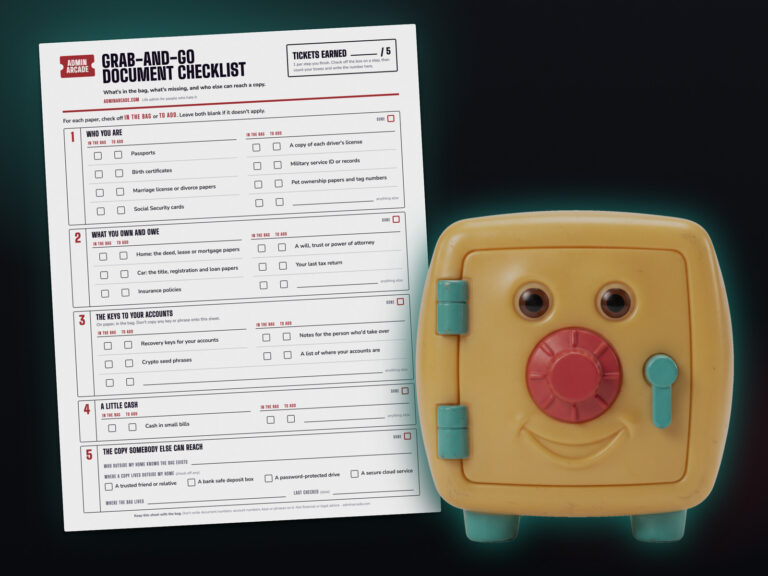
Want the emergency version too? The grab-and-go document checklist is for the bag you'd take in a fire or flood.
Two rules so papers stop ending up in the wrong place
New paper goes to the to-file spot. Not the counter, not the car, not the safe. One spot, emptied once or twice a week.
Only keep-forever papers go in the box. If it's not on the FTC's lock-it-up list, it goes in a folder.
Finish all five steps and you've earned five tickets and Folder Fred, the prize on this one. Nothing expires and there's no streak to lose, so a folder map you start today and finish next month still pays the same five.
Not financial or legal advice. Where an original will belongs depends on your state, so ask a lawyer.
Frequently asked questions
How do I set up a home filing system?
Pick one spot where new papers wait, then set up folders for the parts of your life you have, like taxes, bank, bills, insurance, medical, home and car. Put hard-to-replace originals in a protected box, decide whether each folder lives on paper or in saved files, and back up the saved files.
What are the main categories for filing household papers?
The guides from the FTC, FEMA and university extension offices keep returning to taxes, banking, insurance, medical, home, car, work and retirement, and will and estate papers. Add warranties, pets or side income if they fit your life, and rename anything so it makes sense to you.
What documents should I keep in a fireproof safe?
The FTC's keep-forever list includes birth or adoption papers, Social Security cards, passports, citizenship papers, marriage and divorce papers, military records, wills and powers of attorney, pension papers and family death certificates. NDSU Extension adds deeds and car titles.
Can I keep scanned copies instead of paper?
For many papers, yes. The IRS accepts scanned records if they're complete, readable and easy to pull up, and it lets you toss the paper once you've tested the scans. Keep originals of birth certificates, titles, passports and other keep-forever papers.
Is the printable home filing system free?
Yes, and there's no email required to get it. It's one page, and the Where It Lives tool on this post is free too.